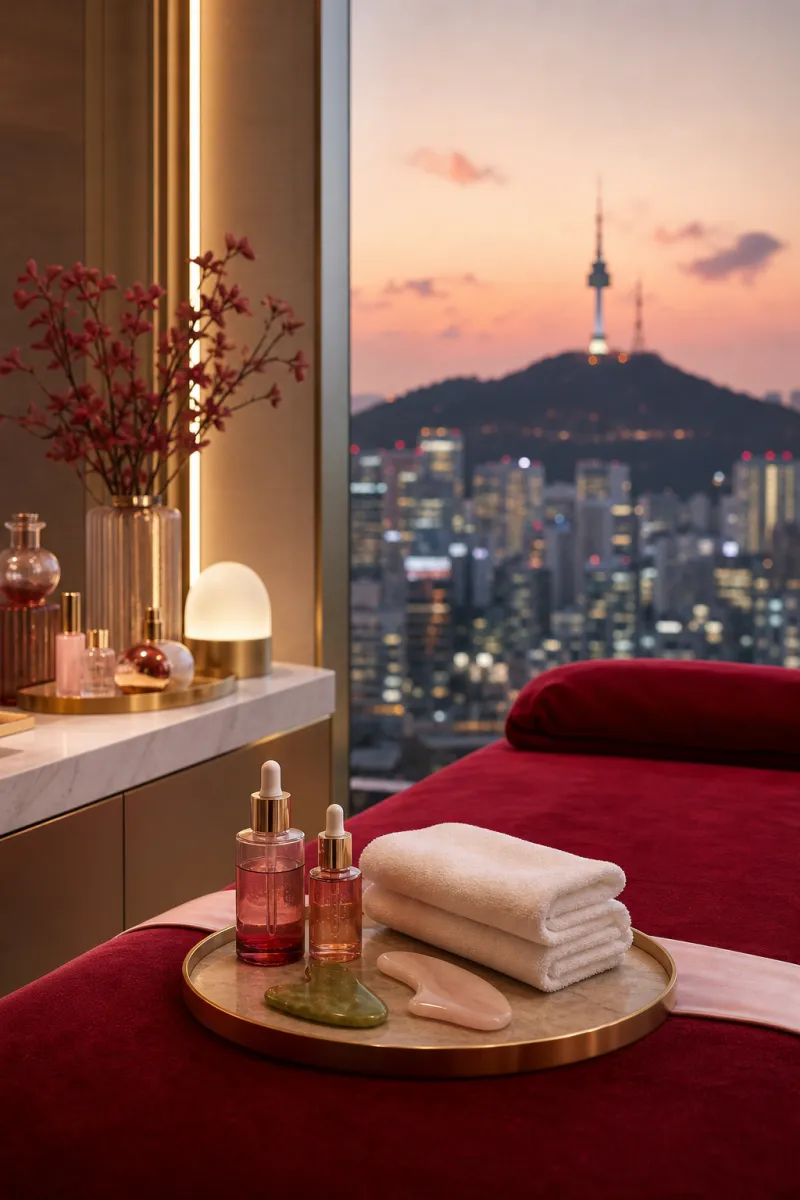
A facial in Korea, when done at a medical clinic, is a 30 to 60 minute sequence of cleansing, one active step such as an acid peel or vacuum hydration, and a calming finish that often uses LED light. No numbing is needed. Most people leave with mild pinkness that fades within hours, so flying home the next day is usually fine; a stronger peel can add one to three days of light flaking. Skin looks clearer and more even within a day, while changes in breakouts or texture build over several sessions. Clinics price facials per session or as packages, and this page compares clinics and their listed prices side by side.
Is it for you?
Who Facials in Gangnam suits, and who should wait
A clinic facial is appropriate for people with congested pores, mild breakouts, dullness, dehydration or redness that flares easily, and for anyone who wants a skin check from a doctor before trying stronger treatments. Visitors often book one early in a trip because it needs almost no recovery time and works on all skin types when the active step is chosen well.
It is not the right tool for deep wrinkles, loose skin, acne scars or established pigmentation; those need lasers, energy devices or injectables. A facial also cannot treat moderate or severe acne on its own. Anyone with a facial infection, an eczema flare or a fresh sunburn should wait until the skin has settled.
Usually a good fit
- Oily or congested skin with blackheads
- Dull, dehydrated skin after travel
- Sensitive skin needing a gentle calming plan
- First visit before a laser or booster course
May be better to wait
- Pregnancy, for peels with stronger acids
- Cold sores, open wounds or eczema on the face
- Recent isotretinoin use or a fresh sunburn
- Deep lines, laxity or scars needing other treatment
Clinics in Gangnam
10 aesthetic clinics in Gangnam
Every clinic below is an aesthetic clinic in Gangnam. Message a clinic directly.
 1
Dear Clinic
 2
Pixelab Beauty Clinic
 3
RE:BERRY Clinic Gangnam
 4
 5
Seye Clinic
 6
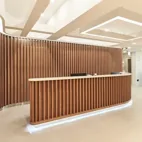
Muse Clinic Gangnam
 7
Jiwoo Clinic
 8
ENTER Plastic Surgery
 9
Tones Clinic Gangnam
 10
Rewind Plastic Surgery
How it works
How a Facials session runs
A medical facial pairs mechanical and chemical exfoliation with a light-based calming step. The peel uses acids such as glycolic, salicylic, mandelic or lipohydroxy acid to loosen dead surface cells; vacuum systems such as HydraFacial use a spiral tip and suction (the Vortex-Fusion design) to exfoliate, extract and infuse serum in a single pass. Neither step reaches below the upper skin layers, which is why recovery is so short.
The final step is often light-emitting diode therapy. A 2020 review in the Journal of Clinical Medicine by Dompe and colleagues describes photobiomodulation as low-level light that is absorbed by cells and shifts their activity toward repair and lower inflammation. A 2026 randomized trial in Photodermatology, Photoimmunology and Photomedicine by He and colleagues found that 590 nm yellow light improved symptom scores in people with sensitive skin, with no adverse events reported.
In Korea, the doctor or trained staff choose the acid, its strength and the light wavelength after the skin check, and clinics charge per session, with add-ons such as extra serums or a skin booster listed separately.
Skin check
Cleansing, then a look at oil, pores, redness and any lesions, often with a camera; 5 to 10 minutes.
Active step
An acid peel or vacuum hydration chosen for the skin type; 10 to 20 minutes, with tingling or a slight pulling feeling.
Extraction
Blackheads and whiteheads cleared by hand or suction where needed; 5 to 10 minutes.
Light and soothing
A calming mask with an LED panel in yellow, red or near-infrared light; about 10 to 15 minutes.
Protect
Moisturizer and sunscreen, plus written aftercare for the next few days.
Facials compared with other options
| Feature | Acid peel | Vacuum hydration | LED light |
|---|---|---|---|
| Main mechanism | Chemical exfoliation | Suction exfoliation and serum infusion | Light absorbed by skin cells |
| Depth | Upper skin layers | Surface and pores | Light passes into the skin, no heat injury |
| Main effect | Clearer pores, smoother texture | Hydration, decongestion | Calming, less redness |
| Sensation | Tingling or warmth | Cool, light pull | Gentle warmth |
| Downtime | Hours, up to three days of flaking | Usually none | None |
At a glance
Facials facts
| Treatment type | Medical facial: exfoliation, extraction, calming |
|---|---|
| Common devices | Vacuum hydration systems such as HydraFacial; LED panels |
| Peel agents | Glycolic, salicylic, mandelic or lipohydroxy acid |
| Light wavelengths | Yellow 590 nm, red 630 nm, near-infrared 850 nm |
| Numbing | Not needed |
| Session length | 30 to 60 minutes |
| Downtime | Pinkness for hours; flaking up to three days after a stronger peel |
| Usual sessions | One for a refresh; a monthly course for breakouts or texture |
| Earliest flight home | Usually the next day |
Recovery
What the days after look like
Pinkness, warmth and tightness that fade over a few hours; sunscreen straight away.
Skin looks clearer; fine flaking is possible after stronger acids. Skip scrubs, acids and retinoids.
Texture settles and makeup sits more evenly; keep up daily sunscreen.
Effect on pores and breakouts is easiest to judge; a repeat session is usually planned around now.
Safety
Facials risks and limits
- Redness, stinging and tightness for a few hours are common.
- Small red marks or a short breakout can follow extraction.
- Stronger peels may cause flaking for up to three days.
- Rarely, irritation, a cold sore flare or temporary dark patches in darker skin.
- Sun exposure soon after a peel raises the risk of pigmentation.
- A facial will not lift sagging skin or remove scars.
Evidence
Research behind this page
- Photobiomodulation—Underlying Mechanism and Clinical ApplicationsJournal of Clinical Medicine · 2020 · Dompe C, Moncrieff L, Matys J, Grzech-Leśniak K, Kocherova I, Bryja A, et al. · doi:10.3390/jcm9061724
A review explaining how low-level light is absorbed by cells and can support tissue repair and reduce inflammation, with examples from skin and other fields.
- Efficacy and Safety of 590 Nm and 590/630 Nm Light‐Emitting Diode Therapy for Sensitive Skin: A Prospective Randomized Controlled TrialPhotodermatology, Photoimmunology & Photomedicine · 2026 · He X, He M, Wang X, Zhang C, Jin S · doi:10.1111/phpp.70090
A randomized trial in 30 people with sensitive skin in which yellow and combined yellow-red LED light improved symptom scores compared with moisturizer alone, with no adverse events reported.
- Anti‐Aging Efficacy of a Home‐use red and Infrared Light‐Emitting Diode Mask and a Cream: Ex Vivo and Clinical Evaluations in Women With Mature SkinSkin Research and Technology · 2026 · Bellanger A, Guéré C, Boisnic S, Godet D · doi:10.1111/srt.70395
Laboratory and exploratory clinical tests of a red and near-infrared home LED mask with a cream, reporting higher elastin and collagen expression in skin samples and changes in mature skin over eight weeks.
FAQ
Questions about Facials in Gangnam
Who performs a facial treatment in Korea, a doctor or a nurse?
In most medical clinics a doctor examines the skin and sets the plan, while nurses or trained aestheticians carry out the steps. The doctor chooses the acid strength and decides whether to add a laser or booster. If the skin reacts during a peel, a doctor can be called in to stop or change it. Ask at the start who will be in the room for each part of the session.
Does the LED step in a facial actually do anything?
It appears to help calm the skin, though the effect is gentle rather than dramatic. In a 2026 randomized trial in Photodermatology, Photoimmunology and Photomedicine, He and colleagues found that 590 nm yellow light improved symptoms of sensitive skin compared with moisturizer alone. Clinics mainly use LED to settle redness after a peel or extraction. Results vary from person to person, and repeated sessions were used in the trial.
What is the difference between yellow, red and near-infrared light?
Yellow light, around 590 nm, is mostly used to calm redness and sensitivity; red light, around 630 nm, and near-infrared, around 850 nm, are used for overall skin quality. The longer wavelengths travel slightly further into the skin. Many panels combine two colors in one session. Ask which wavelength the clinic plans to use and why it suits your skin.
Is a south korea facial suitable for sensitive or reactive skin?
Yes, provided the clinic adapts the plan, usually with a mild acid or no peel, gentle hydration and a longer light step. Fragranced masks, strong scrubs and aggressive extraction are the most common triggers and can be left out. People with rosacea should name it at the skin check. A small test area before the full peel is a reasonable request if the skin has reacted before.
Is it fine to board a long flight right after a facial in South Korea?
Usually yes, especially after a hydration facial or light peel, which leave only short-lived pinkness. Cabin air is dry, so a rich moisturizer and water during the flight help the skin settle. After a stronger peel, leaving one free day before flying is more comfortable. Pack sunscreen in your hand luggage, because window light on a day flight still reaches the skin.
How long does the glow from one facial last?
The fresh, hydrated look typically lasts several days to about two weeks, depending on skin type and routine. Oily skin tends to refill pores faster, while dry skin keeps the smoother texture longer with good moisturizing. Lasting changes in breakouts or texture come from a course of sessions plus home care. Sunscreen and a gentle cleanser make the result hold longer.
Can a home LED mask replace a clinic session?
It can support a routine but does not replace exfoliation, extraction and a skin check. In a 2026 study in Skin Research and Technology, Bellanger and colleagues tested a red and near-infrared home mask used three to four times a week alongside a cream in mature skin. Home devices use lower power and need regular use over weeks. Ask the clinic whether home light fits your plan between visits.
Will a korea facial clinic explain each step in English?
Many clinics that see international visitors offer English during the consultation and give written aftercare, but this varies by clinic. Check what languages each clinic card on this page lists. Understanding the aftercare matters most, especially rules on sun, acids and retinoids for the days after a peel. If anything is unclear, ask for the instructions in writing before you leave.
Can I have a facial while pregnant?
Gentle cleansing, hydration and masks are generally acceptable, but stronger peels, especially salicylic acid at high strength, are usually avoided in pregnancy. Some clinics also skip certain devices as a precaution. Tell the clinic at the skin check so the plan can be adjusted. When in doubt, ask your own doctor before the trip and bring their advice with you.
What skincare should I pack for after facial treatments in Korea?
Pack a gentle cleanser, a plain moisturizer, a broad-spectrum sunscreen and a hat. Leave scrubs, exfoliating acids and retinoids out of your routine for at least three days after a peel. A soothing gel or a cool compress can help on the first evening if the skin still feels warm. Many pharmacies in Korea also stock simple barrier creams, so it is easy to replace anything forgotten.